
2026-08-19 · Tom Henderson
Improving Ventilation in Kitchens and Bathrooms
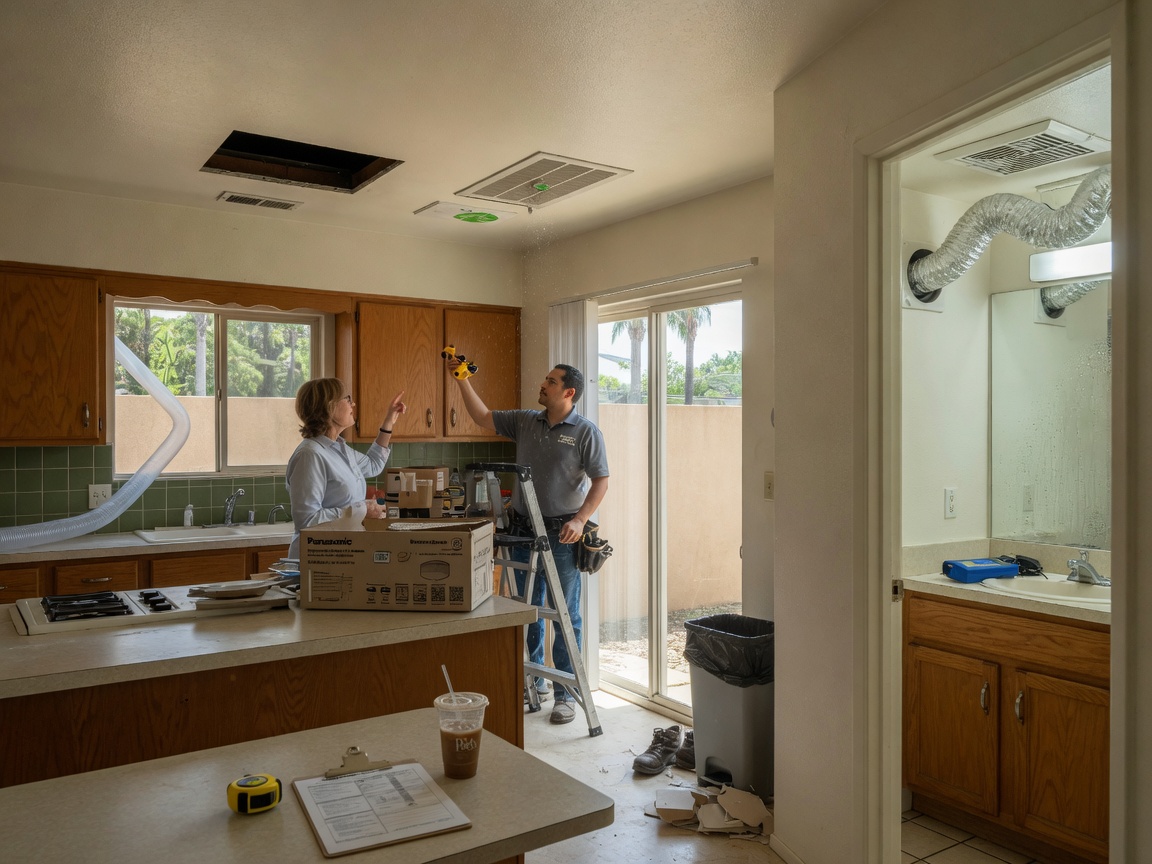
Effective kitchen and bathroom ventilation in Cupertino starts with exhaust fans sized at 100–150 CFM for kitchens and 50–80 CFM for bathrooms, paired with makeup air paths that match the area’s mild Mediterranean climate of warm dry summers and cool wet winters. These rates clear cooking vapors and shower steam before moisture settles on surfaces in older ranch-style homes common throughout Rancho Rinconada and De Anza. Without adequate airflow, residents in Blue Hills and Oak Valley often see mold growth on drywall and cabinets during the rainy season from November through March.
Local Climate and Housing Factors Affecting Ventilation
Cupertino’s cool wet winters create repeated condensation cycles inside homes built in the 1960s through 1980s across Junipero Serra and Homestead. Single-story houses with limited attic space trap humidity when bathroom fans lack proper ducting to the exterior. Kitchens near Apple Park and Cupertino Square see heavy use during family meals, releasing grease and steam that standard range hoods under 100 CFM cannot fully remove. Santa Clara County soil and terrain keep basements rare, so most ventilation relies on roof or wall terminations that must resist wind-driven rain common in nearby Los Altos and Sunnyvale. Upgrading to insulated ducts prevents condensation inside the lines during temperature swings between day and night.
Kitchen Ventilation Upgrades That Perform Locally
Range hoods ducted directly outside outperform recirculating models in Cupertino’s dry summers when windows stay closed for air conditioning. Homeowners in Monta Vista often choose 150 CFM units with variable speed controls to handle stir-fry cooking without excessive noise. Makeup air can be supplied through a dedicated inlet near the range or by slightly opening a nearby window during high-output use. Grease filters require monthly cleaning to maintain airflow; neglected filters reduce effective CFM by up to 40 percent within two years. Connecting the hood to the home’s overall HVAC system through an Indoor Air Quality assessment ensures balanced pressure so exhaust does not pull unconditioned air from attics or crawl spaces.
Bathroom Ventilation Strategies for Wet Winters
Bathroom fans rated 50–80 CFM with humidity-sensing switches run automatically when moisture rises above 60 percent, a frequent occurrence during Santa Clara County’s December-to-February rains. In Rancho Rinconada homes, short 4-inch ducts often terminate in attics instead of through the roof, allowing steam to re-enter living spaces. Extending ducts with smooth, insulated pipe to a roof jack or gable vent reduces this problem. Timer switches set for 20 minutes after shower use clear residual humidity without running all night. Residents in Oak Valley and Blue Hills also benefit from pairing these fans with HVAC Maintenance visits that check overall system balance and filter condition.
Ongoing Care and When to Seek Professional Help
Quarterly checks of fan motors, grille cleanliness, and duct connections keep ventilation effective for 8–12 years before replacement becomes necessary. In homes near De Anza College and Vallco Shopping Center, tree pollen and dust increase filter loading, so pairing bathroom and kitchen exhaust with the guidance in Choosing the Right Filter MERV Rating for Bay Area Homes improves whole-house air quality. When persistent odors or visible mold appear despite fan upgrades, a service call to 10337 Miller Ave #3 during Mon–Fri 7am–5pm allows technicians to measure actual CFM and recommend targeted corrections rather than full system replacement.