
2026-08-19 · Tom Henderson
How to Clean Condenser Coils on Rooftop Units
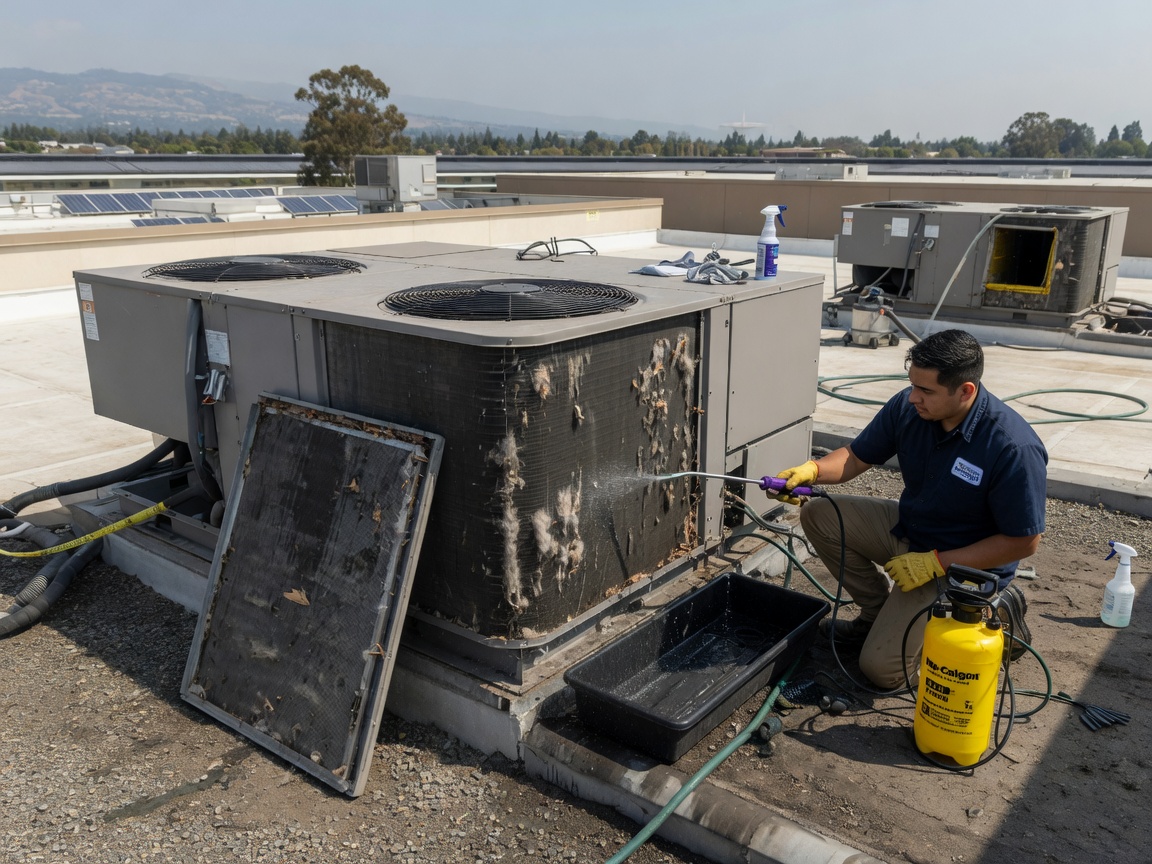
Cleaning condenser coils on rooftop units starts with powering down the system at the disconnect, removing loose debris with a soft brush, applying a non-acidic coil cleaner, and rinsing from top to bottom until water runs clear, a process that takes 90–150 minutes on typical 5–10 ton units serving single-family homes in Monta Vista or Rancho Rinconada.
Preparing Your Rooftop Unit for Cleaning
Before touching any coils, locate the main disconnect switch on the unit or at the base of the roof access ladder and confirm zero voltage with a multimeter. Gather a coil brush with nylon bristles, a pump sprayer, approved foaming cleaner rated for aluminum fins, and a wet/dry vacuum for debris removal. In Cupertino's mild Mediterranean climate, dry summer dust from the Santa Clara Valley settles heavily on fins spaced 12–14 fins per inch, so inspect for bent fins or oil stains that signal leaks before starting. Homeowners in De Anza or Homestead neighborhoods often find that skipping this inspection leads to bent fins that restrict airflow even after cleaning. Always wear eye protection and gloves because the cleaner can irritate skin on contact.
Accessing Units on Local Rooftop Installations
Cupertino homes built in the 1970s through 1990s commonly place packaged rooftop units on flat or low-slope roofs above garages or single-story additions. Use a stable extension ladder rated for at least 250 pounds and secure it to a roof anchor point when working above two stories. Check for loose gravel or membrane tears around the unit curb before stepping onto the roof surface. In neighborhoods such as Blue Hills or Oak Valley, mature trees drop leaves and pollen that collect in the coil corners, making annual access necessary before the first heat wave arrives. Never step on refrigerant lines or electrical conduits during the climb.
Step-by-Step Coil Cleaning Process
Start by brushing away leaves and cottonwood fluff from the top and sides of the coil face. Spray the foaming cleaner evenly across both sides of the coil and let it dwell for the time listed on the product label, usually 5–10 minutes. Rinse with low-pressure water from a garden hose fitted with a fan nozzle, working from the top down so loosened dirt flows out rather than deeper into the fins. Allow the unit to air-dry completely before restoring power, which prevents electrical shorts in the cool wet winters common to Santa Clara County. Repeat the process on the opposite side of the coil if the unit is a double-row design.
Frequency and Climate Factors in Cupertino
Warm dry summers with temperatures often reaching the mid-80s accelerate dust loading on rooftop coils, so most units in Junipero Serra or near Apple Park benefit from cleaning twice per year. The cool wet winters bring less airborne dust but can leave mineral deposits if irrigation overspray reaches the roof. Units serving homes near De Anza College or Cupertino Square see additional pollen from nearby greenbelts. Track runtime hours on the thermostat; once a unit exceeds 1,200 hours in a season, schedule coil cleaning to maintain the 14–16 SEER efficiency the original equipment was rated for.
Knowing When Professional Help Is Required
If fins are heavily corroded, more than 20 percent are bent, or you discover oil stains indicating a refrigerant leak, stop and contact a technician. Rooftop work also carries fall risks on older homes in Los Altos or Sunnyvale where roof access is limited. For routine seasonal care that includes coil cleaning, filter changes, and electrical checks, review the HVAC Maintenance page. Homeowners who want a full seasonal checklist suited to mild climates can read Routine Maintenance Checklist for Heat Pumps in Mild Climates next.