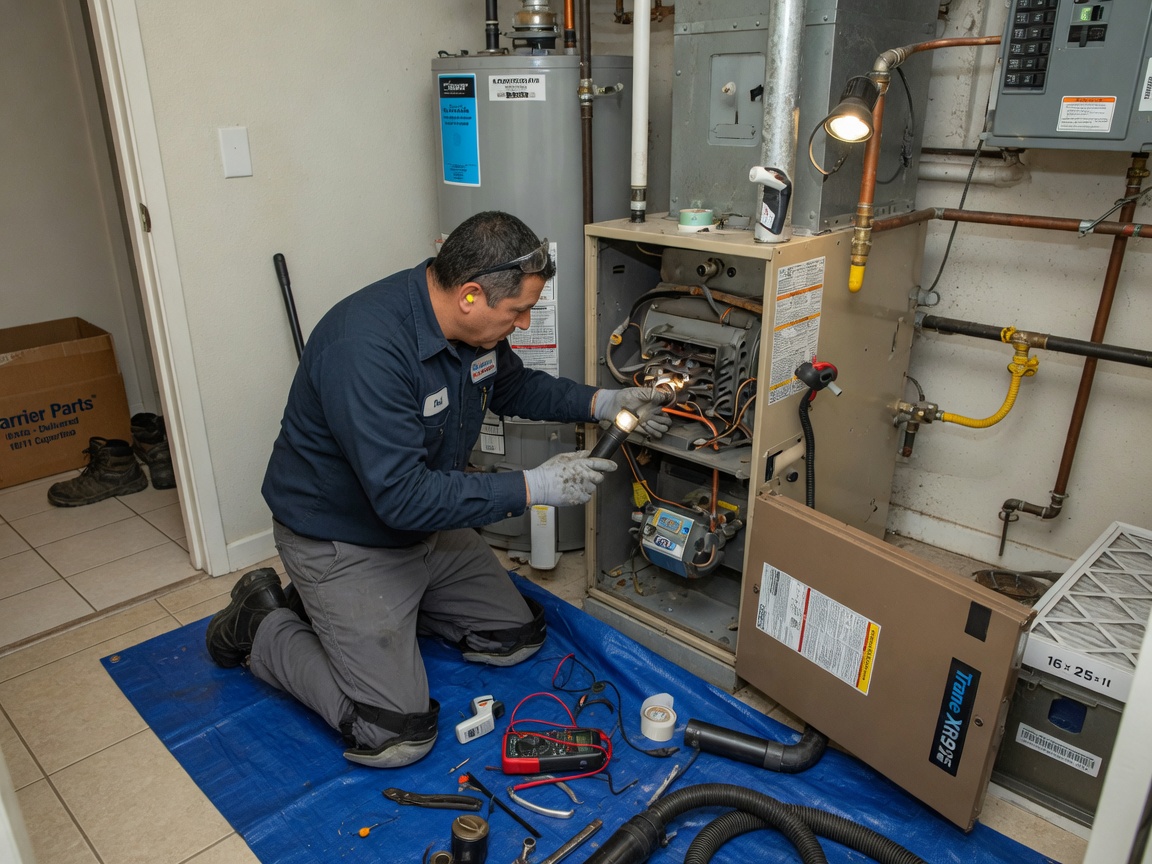
Cupertino homes in neighborhoods like De Anza and Blue Hills often feature furnaces installed decades ago that sit idle through warm dry summers before facing cool wet winters. Dust accumulation from the Mediterranean climate can restrict airflow and strain the blower motor or heat exchanger once temperatures drop. Technicians familiar with Santa Clara County housing stock check for cracked exchangers and worn belts that become evident only during the first cold snap of the season.
Gas furnaces common in Oak Valley and Junipero Serra properties require careful attention to venting because winter rains can introduce moisture into flue pipes if seals have aged. A failing igniter or limit switch may cause short cycling that homeowners notice as uneven heating across multi-level homes near De Anza College. Local crews carry common parts for these units so repairs can finish the same day without ordering delays from suppliers in San Jose or Sunnyvale.
In Rancho Rinconada and Homestead areas, newer high-efficiency models installed during remodels sometimes develop condensate drain clogs from mineral buildup in our water. Technicians test pressure switches and clean drains to restore operation before small issues turn into full shutdowns. Regular checks also catch thermostat calibration drift that affects energy use during the shorter heating season typical of Cupertino.
Work near Apple Park and Cupertino Square often involves coordinating around tight utility access in attached garages common to townhomes. Crews verify proper combustion air supply and test carbon monoxide detectors as part of every visit because sealed homes retain heat but also trap exhaust if a vent is blocked.
Technician insight
In Cupertino the thing that catches most people out with Furnace Repair is dust from our dry summers settling into the heat exchanger of 1970s and 1980s units common in Monta Vista and Homestead; once the first cool wet winter arrives the restricted airflow trips limit switches that homeowners mistake for a simple thermostat problem.
No Heat in Blue Hills Home
A homeowner in Blue Hills reported the furnace running briefly then shutting off each morning. Inspection revealed a clogged condensate drain on a high-efficiency unit installed after a remodel near Blackberry Farm Park. The drain was cleared and the pressure switch tested, restoring consistent heat before the next cool spell.
Furnace Repair Services We Offer
✓Igniter Replacement
Hot surface igniters and flame sensors are replaced to restore reliable startup on gas furnaces common in Monta Vista homes.
✓Blower Motor Repair
Motors and capacitors are serviced or replaced to fix weak airflow and noisy operation during winter use in Rancho Rinconada properties.
✓Heat Exchanger Inspection
Cracks and corrosion are identified early in older units serving Homestead and Blue Hills neighborhoods before safety risks develop.
✓Thermostat Calibration
Wiring and settings are adjusted so systems maintain even temperatures across homes near De Anza College and Vallco Shopping Center.
✓Limit Switch Replacement
Faulty safety switches are swapped to prevent short cycling that occurs when furnaces restart frequently in cool wet winters.
✓Condensate Drain Cleaning
Drains and traps are cleared on high-efficiency models to stop water backup and pressure switch faults in Santa Clara County homes.
Furnace Repair Cost in Cupertino, CA
| Service | Typical Range | What Affects It |
|---|---|---|
| Diagnostic visit | $120–$180 | Covers inspection in Cupertino and nearby Santa Clara County homes |
| Igniter or sensor replacement | $250–$450 | Includes part and labor for standard gas furnaces |
| Blower motor service | $350–$650 | Varies with motor type and access in older homes |
| Heat exchanger evaluation | $150–$250 | Added when cracks are suspected during repair |
Ranges are typical for Cupertino, CA and confirmed with an exact written quote before any work starts.
How it works
- 1
Initial Assessment
Technician arrives at the Cupertino address and reviews system age, recent symptoms, and access points around the furnace.
- 2
Diagnostic Testing
Electrical, gas pressure, and airflow readings are taken to pinpoint the exact component causing the failure.
- 3
Component Repair
Faulty parts such as igniters or motors are replaced using stock carried on the truck for common local models.
- 4
System Verification
The furnace is run through a full cycle and combustion is checked before the homeowner is shown the completed work.
- 5
Final Walkthrough
Operation is demonstrated and any maintenance recommendations for the next heating season are provided.
Pricing
Upfront quotes provided after on-site inspection; cost depends on parts needed and furnace age.